(From 2005)
Pakistan to start making Boeing parts next month
ISLAMABAD (May 10 2005): Pakistan would start manufacturing parts of Boeing aircraft from June this year, thus, formally joining the club of aviation parts manufacturers. During a visit of media persons to Pakistan Aeronautical Complex (PAC), Kamra, on Monday, it was stated by PAC chief Air Marshal Aurangzeb that Boeing aircraft Co, have set up parts manufacturing unit at the PAC. "At this factory through Boeing offset program, we shall be manufacturing aviation parts for Boeing 747, 767 and 777 aircraft," Air Marshal Aurangzeb said. He said know-how thus gained through this venture will certainly help in establishing JF-17 (Thunder) aircraft production line.
"Around 20 parts of Boeing aircraft would be manufactured here for the Boeing company, which has set up parts manufacturing plant as part of the agreement for supply of 777 aircraft to Pakistan International Airlines," another PAC senior officer said during the visit to the under-installation plant unit.
He said parts of Boeing would be manufactured here and sent to the company for their onward sale and supply.
Technicians of Boeing are working on the installation of the plant which would be completed by the end of this month and would start production from next month, he added.
MUSHAK DELIVERY: Air Marshal Aurengzeb said the delivery of 20 Super Mushak trainer aircraft to Saudi Arabia would successfully complete by September this year.
"We have already handed over a lot of seven aircraft to Saudi Arabia while a batch of another eight aircraft would be handed then over by end of this month," he told a questioner.
The rest five aircraft, making the total to 20, would be handed them over during September, he added.
This supply of the aircraft has not only earned the country a sizable amount in foreign exchange but also would help build the image of PAC for production of quality and reliable lot.
Source:
Business Recorder, May-09, 2005
www.brecorder.com
Wednesday, March 9, 2011

Tuesday, February 15, 2011
Pakistan can survive without US aid
The US has threatened Pakistan that if Raymond Davis is not released, then there is a possibility that US aid to Pakistan will be cut. The Washington Post had speculated that America would stop dialogue at all levels including strategic dialogue, if Raymond Davis was not released quickly. Though, the US administration itself has not said in so many words, yet it is conveying the message through its media or law makers. Meanwhile, the three-member delegation of House of Representatives in their meetings with Prime Minister Yousuf Raza Gilani and other leaders demanded of the government to release Raymond Davis, who was arrested on 27th January 2011 after shooting dead two Pakistani motorcyclists. Representative Buck McKeon, chairman of the House Armed Services Committee reportedly told the Pakistani leaders that Congress was working on the budget, while the representative John Kline hinted that many lawmakers would support cutting aid if the American, who the United States insists has diplomatic immunity, is not freed.
For a change, our Foreign Office has picked up the courage to tell Americans that the matter is with the court. Anyhow, the situation, by and large, is of our own making, as our ruling elite did neither pursue economic policies to make Pakistan self-reliant nor did they learn to live within their means. They had to depend on the US for aid for their failure to generate revenue by taxing the rich and to control tax evasion of more than Rs. 1000 billion. Though belatedly, the political leadership has taken steps by dissolving the jumbo-cabinet and is likely to form a small cabinet, which could be described as humble beginning, yet a lot more needs to be done. It is true that Pakistan is facing fiscal deficit and trade deficit; however the fiscal deficit can be controlled through austerity and other measures like stopping tax evasion and corruption. Trade deficit could be reduced through banning the import of luxury items. Last but not the least, Zardaris, Sharifs, Chaudharys and others who have stashed their wealth in foreign banks and invested in real estate and industries should bring that wealth back.
With all these steps, Pakistan can say no to the IMF and also resist American pressure, and can safeguard its integrity and sovereignty. Yet a lot has to be done, and the ruling and opposition parties must wean away from the habit of amassing wealth through illegal means. The role of our apex court is commendable, but it should not only focus on written-off loans during the last two years but also from 1977, as one would not hear large scale corruption during the tenure of the governments up to 1958 and also during Ayub era. Anyhow, if corruption can be controlled, appointments in public sector organizations are made on merit and losses can be minimized, and due taxes are collected through efficient and honest officers Pakistan can come out of the dependency syndrome within a short period. Supreme Court has also done well to stop renewal of exploration and mining licenses in regard to Reko Diq gold and copper mines, and should not allow squandering the national resources.
Some analysts and ‘brilliant’ panelists are trying to create fear in the minds of the people that if Raymond Davis is not released, the US would stop economic and military aid. Instead of suggesting how to get out of the dependency syndrome and make Pakistan a self-reliant economy, they want Pakistan should tread the beaten track. Let us examine the impact if the US stops its aid and also persuades the IMF not to issue further tranches, what is likely to happen? According to Kerry-Lugar bill, the US is to give $1.5 billion per year, out of which more than 50 per cent is to be spent through NGOs. With America’s economy already in dire straits, and with Republicans’ majority in the Congress, there is possibility of major cut in foreign aid to other countries. And the axe is surely to fall on Pakistan and not Israel or other American allies. As regards reimbursement of Coalition Support Fund, the US has delayed payment for the last one year, and has paid only a few hundred million dollars against the amount of $1.5 billion.
However, Pakistan will have to revise its budget projections, should America stop aid to Pakistan. Look at the position of trade deficit If Pakistan stops importing luxuries and revises its projections of imports at $20 billion (instead of $32 billion), and lowers the target of export to 11 billion (instead of $20 billion). With Pakistani expatriates’ remittances of $10 billion, Pakistan will overcome the problem of current account deficit. According to 2010-11 budget, Pakistan’s estimated tax revenue is Rs.1671 billion; non-tax revenue is 904 that totals Rs.2575 billion. If tax evasion can be controlled and the rich are to pay due tax, there would not be decline in revenue. Finally, all incomes have to be taxed. If agriculture is a provincial subject, let the provinces enact and impose tax on agricultural income. One does not understand that when all citizens whether businessmen, industrialists, doctors, engineers, professionals and salaried class are paying tax on taxable income, why income from agricultural land should be exempted.
The question is who has brought Pakistan to the present pass? The answer is that Pakistan’s incompetent and inept ruling elite by becoming a pawn in the hands of Americans, first by joining defense pacts with the US and the West, then by joining Afghan jihad and finally in the war on terror. One can find American agents in political parties, in media and other institutions as well. Lately, it is military that has given courage to the political leadership to put their act together to safeguard sovereignty of the country. It has to be said that Afghan jihad, and latter the war on terror, which has now become our own war due to flawed policies of the US, especially the CIA. Unfortunately, the US spies and media blame Pakistan for their flawed decisions and failures. Bruce Reidel, a former CIA director, in his book ‘Deadly Embrace: Pakistan, America and Global Jihad’, sets out to explain “why successive US administrations have undermined civil government in Pakistan, aided military dictators and encouraged the rise of extremists Islamic movements that now threaten the United States at home and abroad”.
This question has not been phrased properly. First of all, the word ‘encouraged’ should have been replaced by the word ‘sponsored’, as it was America that tried to settle score with the former Soviet Union to avenge the defeat in Vietnam. Secondly, it has always been well-thought out plan of every US administration to support autocrats and military dictators, as it is difficult to deal with the cabinet and members of the parliaments to advance its interests. In developing countries, however, so-called democratic dispensations are no different from military dispensations.
Anyhow, when dictators become unpopular by pursuing American policies and also due to America’s unqualified support to Israel, America issued only one liner statement that ‘he had become unpopular with his people’. It happened with Shah of Iran, Suharto of Indonesia, Ayub Khan of Pakistan and lately Zine al-Abedin of Tunisia. And only incorrigible optimist can hope any change in America’s approach. Pakistan’s rulers should remember Henry Kissinger’s words that “America is dangerous for its friends and foes alike”.
—The writer is Lahore-based senior journalist.
For a change, our Foreign Office has picked up the courage to tell Americans that the matter is with the court. Anyhow, the situation, by and large, is of our own making, as our ruling elite did neither pursue economic policies to make Pakistan self-reliant nor did they learn to live within their means. They had to depend on the US for aid for their failure to generate revenue by taxing the rich and to control tax evasion of more than Rs. 1000 billion. Though belatedly, the political leadership has taken steps by dissolving the jumbo-cabinet and is likely to form a small cabinet, which could be described as humble beginning, yet a lot more needs to be done. It is true that Pakistan is facing fiscal deficit and trade deficit; however the fiscal deficit can be controlled through austerity and other measures like stopping tax evasion and corruption. Trade deficit could be reduced through banning the import of luxury items. Last but not the least, Zardaris, Sharifs, Chaudharys and others who have stashed their wealth in foreign banks and invested in real estate and industries should bring that wealth back.
With all these steps, Pakistan can say no to the IMF and also resist American pressure, and can safeguard its integrity and sovereignty. Yet a lot has to be done, and the ruling and opposition parties must wean away from the habit of amassing wealth through illegal means. The role of our apex court is commendable, but it should not only focus on written-off loans during the last two years but also from 1977, as one would not hear large scale corruption during the tenure of the governments up to 1958 and also during Ayub era. Anyhow, if corruption can be controlled, appointments in public sector organizations are made on merit and losses can be minimized, and due taxes are collected through efficient and honest officers Pakistan can come out of the dependency syndrome within a short period. Supreme Court has also done well to stop renewal of exploration and mining licenses in regard to Reko Diq gold and copper mines, and should not allow squandering the national resources.
Some analysts and ‘brilliant’ panelists are trying to create fear in the minds of the people that if Raymond Davis is not released, the US would stop economic and military aid. Instead of suggesting how to get out of the dependency syndrome and make Pakistan a self-reliant economy, they want Pakistan should tread the beaten track. Let us examine the impact if the US stops its aid and also persuades the IMF not to issue further tranches, what is likely to happen? According to Kerry-Lugar bill, the US is to give $1.5 billion per year, out of which more than 50 per cent is to be spent through NGOs. With America’s economy already in dire straits, and with Republicans’ majority in the Congress, there is possibility of major cut in foreign aid to other countries. And the axe is surely to fall on Pakistan and not Israel or other American allies. As regards reimbursement of Coalition Support Fund, the US has delayed payment for the last one year, and has paid only a few hundred million dollars against the amount of $1.5 billion.
However, Pakistan will have to revise its budget projections, should America stop aid to Pakistan. Look at the position of trade deficit If Pakistan stops importing luxuries and revises its projections of imports at $20 billion (instead of $32 billion), and lowers the target of export to 11 billion (instead of $20 billion). With Pakistani expatriates’ remittances of $10 billion, Pakistan will overcome the problem of current account deficit. According to 2010-11 budget, Pakistan’s estimated tax revenue is Rs.1671 billion; non-tax revenue is 904 that totals Rs.2575 billion. If tax evasion can be controlled and the rich are to pay due tax, there would not be decline in revenue. Finally, all incomes have to be taxed. If agriculture is a provincial subject, let the provinces enact and impose tax on agricultural income. One does not understand that when all citizens whether businessmen, industrialists, doctors, engineers, professionals and salaried class are paying tax on taxable income, why income from agricultural land should be exempted.
The question is who has brought Pakistan to the present pass? The answer is that Pakistan’s incompetent and inept ruling elite by becoming a pawn in the hands of Americans, first by joining defense pacts with the US and the West, then by joining Afghan jihad and finally in the war on terror. One can find American agents in political parties, in media and other institutions as well. Lately, it is military that has given courage to the political leadership to put their act together to safeguard sovereignty of the country. It has to be said that Afghan jihad, and latter the war on terror, which has now become our own war due to flawed policies of the US, especially the CIA. Unfortunately, the US spies and media blame Pakistan for their flawed decisions and failures. Bruce Reidel, a former CIA director, in his book ‘Deadly Embrace: Pakistan, America and Global Jihad’, sets out to explain “why successive US administrations have undermined civil government in Pakistan, aided military dictators and encouraged the rise of extremists Islamic movements that now threaten the United States at home and abroad”.
This question has not been phrased properly. First of all, the word ‘encouraged’ should have been replaced by the word ‘sponsored’, as it was America that tried to settle score with the former Soviet Union to avenge the defeat in Vietnam. Secondly, it has always been well-thought out plan of every US administration to support autocrats and military dictators, as it is difficult to deal with the cabinet and members of the parliaments to advance its interests. In developing countries, however, so-called democratic dispensations are no different from military dispensations.
Anyhow, when dictators become unpopular by pursuing American policies and also due to America’s unqualified support to Israel, America issued only one liner statement that ‘he had become unpopular with his people’. It happened with Shah of Iran, Suharto of Indonesia, Ayub Khan of Pakistan and lately Zine al-Abedin of Tunisia. And only incorrigible optimist can hope any change in America’s approach. Pakistan’s rulers should remember Henry Kissinger’s words that “America is dangerous for its friends and foes alike”.
—The writer is Lahore-based senior journalist.
Monday, February 14, 2011
Monday, January 24, 2011
Zalmay Rassoul should be warned in Islamabad
The Afghan foreign minister Mr. Zalmai Rassoul will arrive in Islamabad next week for discussion on issues relating to the American withdrawal. Afghan Pakistan relations have improved a lot, thanks to Turkish intervention. the main issues to be discussed are regional security, the US pullout plan and reconciliation with the Afghan National Resistance (ANR).
When the Bharati Foreign Minister visited Kabul a couple of weeks ago Krishna and Rassoul discussed the issue of terrorism and that they agreed on the need to deal “firmly with terrorist groups that continue to exist outside Afghanistan‘s borders.”
This sort of nonsense has to be stopped in the tracks. Mr. Zalmai Rassoul has to be told in no uncertain terms that by making Anti-Pakistan statements he was playing with fire, and that such inane talk is not conducive to good neighborly relations.
Hundreds of terrorists come from Afghanistan into Pakistan. Afghanistan hosts Baloch terrorists, Iranian terrorists and every other scoundrel on earth. Millions of Afghan Refugees have squatted in Pakistan for decades and don’t want to leave.
Bharat has no role in Afghanistan and should be evicted. Delhi’s Anti-Pakistan activities have to be stopped–and stopped now.
Both Rassoul and the Pakistan Foreign Minister Mr. Mahmoud Qureshi will head out to Washington next month for crucial talks on the US withdrawal plans in July.
Mr. Rassoul, who is due on January 25, will hold detailed discussions with Pakistan’s President, Prime Minister, Foreign Minister the General Kayani. The topics of discussion will be to create a joint strategy for the joint Pakistan, Afghanistan and US trilateral meeting convened in Washington to seek an end to America’s longest war that has entered its 10th year.
Mr. Rassoul should be clearly told that he cannot hope to build better relations with Islamabad if he continues to bad mouth Pakistan.
When the Bharati Foreign Minister visited Kabul a couple of weeks ago Krishna and Rassoul discussed the issue of terrorism and that they agreed on the need to deal “firmly with terrorist groups that continue to exist outside Afghanistan‘s borders.”
This sort of nonsense has to be stopped in the tracks. Mr. Zalmai Rassoul has to be told in no uncertain terms that by making Anti-Pakistan statements he was playing with fire, and that such inane talk is not conducive to good neighborly relations.
Hundreds of terrorists come from Afghanistan into Pakistan. Afghanistan hosts Baloch terrorists, Iranian terrorists and every other scoundrel on earth. Millions of Afghan Refugees have squatted in Pakistan for decades and don’t want to leave.
Bharat has no role in Afghanistan and should be evicted. Delhi’s Anti-Pakistan activities have to be stopped–and stopped now.
Both Rassoul and the Pakistan Foreign Minister Mr. Mahmoud Qureshi will head out to Washington next month for crucial talks on the US withdrawal plans in July.
Mr. Rassoul, who is due on January 25, will hold detailed discussions with Pakistan’s President, Prime Minister, Foreign Minister the General Kayani. The topics of discussion will be to create a joint strategy for the joint Pakistan, Afghanistan and US trilateral meeting convened in Washington to seek an end to America’s longest war that has entered its 10th year.
Mr. Rassoul should be clearly told that he cannot hope to build better relations with Islamabad if he continues to bad mouth Pakistan.
Monday, January 3, 2011
Pakistan: A cultural profile
Landscape and climate:
Pakistan is a long narrow country, about the size of British Columbia, with diverse landscapes and climates. It is bounded by India to the east and southeast, the Arabian Sea to the south, Iran to the west, Afghanistan to the west and northwest and China to the north. Through a system of canals, the river Indus runs through Pakistan, irrigating most of the country. The five rivers of the Punjab flow into the Indus River. The word Punjab comes from panj which means five and ab meaning water, the land of the five rivers.
Pakistan is divided into four provinces: Punjab, Sindh, the North-West Frontier and Baluchistan. Each province is home to different cultural groups who have their own distinctive languages and customs. Islamabad, the capital of Pakistan, lies at the base of the Margalla Hill in the Punjab province. A majority of Pakistanis live in this province. Lahore is a major industrial and tourist center known for its forts, gardens and mosques.
Karachi, Pakistan's largest city, is located in Sindh province. It is a principal port and is important for commerce. The mountains of the North-West Frontier are picturesque. The famous Khyber Pass lies in these mountains. Some resorts are located in this area as well. Baluchistan is a province of contrasts. Parts of it are uninhabitable desert and other parts are forested and have many resorts. Baluchistan is rich in important minerals and produces the world's finest onyx, a semi-precious stone.
In the north are some of the highest mountains in the world, may of which are snow- covered all the year round. To the south are some of the hottest deserts in the world temperatures can hover around 50°C. These Southern areas are not irrigated by the rivers and canals that web the rest of the country.
Pakistan is in the warm Temperate zone with hot, dry, summers and cool winters. There are three distinct seasons. The northern areas can experience heavy snowfall and temperatures below freezing point.


Basic facts:
Official Name: The Islamic Republic of Pakistan
Capital: Islamabad
Type of Government: Parliamentary Democracy
Population: 127,962, 000; 416.3 persons per square mile; 32.0 percent urban, 68.0 percent rural (1993 estimate)
Area: 310,404 square miles
Languages: Balochi, Kashmiri, Punjabi, Lashkari (official), Sindhi, Pakhtun and other minor languages.
Religion: Islam, Christianity, pagan, Bhuddism, other.
Unit of Currency: Pakistani rupee.
Ethnic Composition: Punjabis, Sindhis, Pathans (Pakhtuns), Kashmiris, Baluchis, other.
Date of Independence: August 14, 1947
National Flag:

History:
Pakistan has an ancient history. Pakistan's cultural and social history dates back about 5000 years. Mohenjedaro and Harappa were the two urban centers of the Indus Valley Civilization, one of the oldest in the world. Today, these areas form parts of the Sindh and Punjab provinces of Pakistan.
Over the millennia, the Indus Valley/Pakistan, witnessed the immigration of different groups from the West. The Aryans migrated around 1500 B.C. and mixed with the people known as Dravidians. Parts of Pakistan were visited by successive armies from Greece, Afghanistan and Persia, which is today a province of Iran. The Arab Muslims arrived in the eighth century A.D. and brought the Islamic religion with them. Waves of Arabs and Turks followed, and large numbers of people converted to Islam from Hinduism.
In 1601 the British came as traders to the Indian subcontinent and by 1858 the British government forcibly took control of the area. In the 19th century the Indian National Congress was formed to challenge British rule over Southern Asia. Mohamed Ali Jinnah, the leader of the Muslim League, was one of the key political activists along with Mahatma Gandhi and Jawaharlal Nehru in the Congress Party.
In 1945, Jinnah the leader of the Muslim League, demanded a separate nation to distinguish its territories from the British Raj. Pakistan became a sovereign nation State on August 14, 1947. When the British left the region, millions of Barahmans, Shivites etc. and Sikhs fled to India and millions of Muslims and fewer Christians came to Pakistan.
Family life:
Pakistani families are very close, often consisting of grandparents, parents and children living together in the same house. The smaller family is becoming more of a reality in the urban centers. The elderly often live with their children and are treated with great respect. Children tend to accompany their parents to most social events. Important events in the family's life are celebrated with relatives and friends.
Pakistani families are usually large because children are considered to be gifts from God or Allah. Teaching children the beliefs of Islam is considered to be one of the most important responsibilities of family life.
This has been the key contributor of Pakistan's overpopulation crisis; however more steps being taken to control population growth rates in the country.
Most Pakistani marriages are arranged. When a couple is married, the bride applies mehndi or henna paste to her hands and feet and the quazi, the religious leader, administers the nikah or marriage contract.
Strong traditions and values influence women's status in the family and in the community. These affect opportunities for education and for work, especially for less privileged women.
When a male baby is born, circumcision is performed in accordance with religious rites. When he is seven days old, the family holds an aqeeqa ceremony, which is a family feast. Both men and women wear the shalwar-kameez, the national dress. This consists of loose pants gathered at the waist and worn with a long shirt. The women's clothing is more colorful, and is worn with a long scarf or dupatta. Some wear a chaddar, which is a shawl or long garment. In the urban areas men are more likely to wear western-style clothes.
Wealthy families and middle-class families live in bungalows or large apartment buildings. Many employ servants to perform various household duties.
In the cities' poorer areas, families live in two or three room dwellings. In rural Pakistan, cooking is still done on small kerosene stoves, clothes are washed on the banks of rivers and water is transported from rivers and wells.


A world of work:
Nearly one-half of the population of Pakistan lives and works on the land. Agriculture constitutes a large sector of the economy. It contributes one-quarter of the Gross Domestic Product and also earns foreign exchange. In most villages, old farming ways continue, though large farms use chemical fertilizers and modern machinery. The main export crops are cotton, rice, grain, sugar cane and jute. Pakistan is one of the world's largest suppliers of cotton, which is its main cash crop. Wheat is the major food grain.
Often due to financial necessity many young children work at factories rather than go to school. The handicraft industry produces handmade carpets, silk fabrics, embroidered textiles, brass work and pottery that are admired and exported all over the world.
Pakistan's industries range from steel plants, sugar refineries, cement works, paper and textile mills, manufacture of cars to electronics factories. The textile sector produces almost 60% of Pakistan total export. The small scale industries that dot the land play a key role in industrial development.

Sports:
Pakistanis are enthusiastic sports fans and families watch many sporting events together. Field hockey, cricket and squash are favorite sports. Pakistani soccer players are among the best in the world, but cricket is the country's passion. Cricket is to Pakistanis what hockey is to Canadians. Pakistan also holds occasional polo competitions.
The foothills of the Himalayas offer opportunities for mountain-climbing, trekking and, in winter, skiing.
In the Arabian Sea Deep sea fishing, sailing and water sports are possible.
A traditional Pakistani sport is kabaddi. It is performed by a group that wrestles, as well as runs, while repeating the word kabaddi in one deep breath.

Health care:
Health care in Pakistan is government sponsored, but over the years private health care providers have become more common. Pakistan has made great strides in reducing mortality rates. It is, however, a constant struggle to meet the health care needs of the rapidly expanding population.
The government's strategy is aimed at primary health care, making essential drugs for common diseases available at affordable prices. Programs of immunization against common diseases have been implemented through outreach and mobile teams. They concentrate on reducing the number of cases of malaria.
Most Pakistanis find medical help at local clinics and hospitals. Some still turn to hakims, herbalists, for traditional medicines for common illnesses. Pakistani women prefer female doctors and men prefer male doctors.

Education:
The official language of Pakistan is Lashkari, which possibly originated in Lahore during Ghaznavid rule and has gone by different names throughout much of it's history. But most people also speak regional languages and Lashkari as their second or third language. These are Punjabi, Sindhi, Balochi, Kashmiri and Pakhtun. English remains the language of the educated and is used in commerce and government alongside Lashkari. Educational facilities have been expanding, but literacy rates are still lower than most countries in the region.
The government has established Islamic schools in certain areas to ensure primary education and knowledge of religion. Locally based traditional schools have existed for centuries. The government encourages families to send children to school by providing scholarships and cash incentives.
In the cities, many students attend private schools which are believed to provide a better standard of education. The children learn Islamic history and the it's basic tenets alongside academic subjects and languages. In urban areas, there are many vocational schools at which students learn a trade after finishing high school.
College and university education depends on the financial and academic ability of the student. Pakistan has an affirmative action policy that favors rural students over urban ones. Pakistani students attend law school, or specialize in engineering, nuclear physics, and agricultural sciences, among other disciplines. Most colleges and universities are co-educational.

Food:
The cuisine of Pakistan is diverse by province and regions, though they are very similar to one another.
Roti (bread), chawal (rice), sabzi (vegetables) and gosht (meat) are the four main components of a Pakistani meal. Naan is the most popular form of bread and is eaten at almost any meal. It is a flat, leavened bread made in a tandoor or clay oven and is normally purchased to supplement the home-cooked meal. Parathas and chapatis both flat round breads, are also favorites.
Rice is eaten often and is usually simple boiled . For special occasions, biryani is made by cooking rice in a yoghurt and meat sauce, and served with saffron. Kheer, a richer and more liquid version of the rice pudding, is cooked with cardamoms, cloves and cinnamon.
Muslims refrain from eating any pork. Most Pakistanis follow this diet restriction rigidly and will even avoid foods cooked with lard. Alcohol is also prohibited in Islam. Many Pakistanis will eat only `halal' meaning `kosher' meat. Chicken, goat and beef are popular either in curried form or char-grilled in a tandoor. Specialties include kebabs, tikka (barbecued spiced chicken), korma (meat curry) and pulao (rice cooked with meat).
Mithai are sweets made of flour and milk or cream and are cooked in sweet syrups. These are very popular and are enjoyed on special occasions. Paan, a mixture of tobacco paste, spices and betel nut spread on a betel leaf, is a common way of ending a meal and is believed to help digestion.


Language and communication:
The division of Pakistan into its four provinces: Punjab, Sindh, Baluchistan, Kashmir and Pakhtunkhwa was largely done on the basis of the major languages. Each of these principal ethnic groups and mountain tribes has its own language. Punjabi, Sindhi, Baluchi, Kashmiri and Pakhtun, respectively as well as pockets of minor languages and/or dialects. Educated Pakistanis are able to read and write in Lashkari as well as in English.
Islam has influenced the language and the philosophy of the people. Hence, it is common for Pakistanis to mention God's name in everyday instances. For example, Bismillah means "I begin in the name of Allah" Muslims commonly use this phrase before starting any activity. Inshaallah means "if it is the will of Allah." which is a response to any invitation. This expresses their intent but also suggests that events are not really within their control.
Here is a list of Lashkari phrases for you to try:
Huh = Yes
Neyhe = No
Assalaam Alaikum = Peace be upon you (Derived from Arabic)
Wa'alaikum salaam = And May peace be upon you too (Derived from Arabic)
Aap ka naam kya hai? = What is your name?
Meri naam hai....= My name is...(feminine)
Mayra naam hai...= My name is...(masculine)
Shukriya = Thank you
Khuda hafeez = Goodbye/God be with you

Religion and spirituality:
More than 97% of Pakistan's population is Muslim. The remaining 3% is made up of Brahmans, Shivites, Buddhists, Zoroastrians, Christians, Sikhs and smaller cults and religions some of which are continuations of Indo-European folklore, most notably in the Kalash. Islam is the official religion of Pakistan. A Federal Shariat Court has been set up to review the country's laws in the light of the Islamic penal code. Muslims are guided by the Quran, or Koran, the holy book, which they believe was revealed to the Prophet Mohammed.
Islam, Christianity and Judaism share many common beliefs and traditions. The giving of alms and compassion for the poor are stressed in these religions. Muslims are obliged to give 2.5% of their wealth to the needy. All three religions also stress the transitory nature of life on earth as a preparation for the hereafter.
Devout Muslims must heed the call of prayer five times every day. They pray facing the city of Mecca in Saudi Arabia. Most Muslims will arrange their schedules according to the prayer times. The prayer is preceded by the required ablution, which means washing the face, hands and feet. Friday is the Muslim holy day and most Pakistanis participate in congregational prayers in the mosque.
Once a year, there is Ramadan, the holy month of fasting. No food or drink is permitted from dawn to dusk. The end of this month is celebrated with special meals and festivities for Eid-al-Fitr. Muslims are also required to perform the Hajj, a holy pilgrimage to Mecca, once in their lifetime if they are financially able to do so. The last day of the pilgrimage commemorates the second major festival of Islamic belief,Eid-al-Adha.


Holidays:
The important festivals of the year are either religious occasions or a commemoration of the creation of the country. Eid-al-Fitr follows the month of fasting, Ramadan. Eid-al-Adha is celebrated in memory of Abraham's willingness to sacrifice his son to God. These religious holidays vary every year according to the lunar calendar and are occasions for families and friends to visit each other, share gifts and special treats. People dress in their finest clothes for these festivities. Money is donated to the poor and an animal is sacrificed by those who can afford it.
National holidays include:
* Independence Day (August 14);
* Death anniversary of Quaid-E-Azam, Jinnah, the founder of Pakistan (September 11);
* Birthday of Quaid-E-Azam (December 25).
Other holidays are
* Pakistan Day (March 23) which commemorates the passing of the Pakistan Resolution;
* National Defense Day (September 6);
* Labor Day (May 1).


Arts and literature:
Pakistan has a long tradition of art and poetry. The focus of Islamic art is on geometric patterns and designs and is judged to be one of the most complex in the world. Symmetric and elaborate designs grace mosques and the ancient palaces of the Mogul Dynasty, the Muslim empire of India prior to British rule.
The Mogul influence is also evident in Pakistan's architecture with its delicate and sophisticated motifs and designs.
In Pakistani culture, writing has been developed into an art form. Calligraphy is drawn from the Koran and then embellished with elaborate designs. It is often featured on large scrolls hung in the interior of mosques, palaces and Pakistani homes. The fascination with colorful and abstract art forms is apparent in the paintings that adorn the sides of buses and trucks and is a unique characteristic of Pakistani cities.
For entertainment, Pakistani films, as well as dramas made for television and video are popular. Poetry is an integral part of Pakistani culture. Qawwalis, a devotional song, is one of the most revered forms of poetry set to music and is accompanied by a hand clapping chorus. The ghazal is a lyrical form of rhythmic chanting that is set to music and addresses the trials and tribulations of a lover.
Below is a translation of a qawwali: The poetry and the devotion is evident in the lines:
"I have no one to turn to but you (God)
may I be blessed with your Divine attention"
Whereas the romantic verse in the ghazal goes:
"This intoxication that is gradually overpowering me
Is the result of the magic of your eyes."

To learn more:
http://ancientpakistan.info/
http://www.heritage.gov.pk/index.html
http://www.personal.kent.edu/~rmuhamma/Personal/Pakistan/PakHistory/timeLinePak.htm
http://www.newworldencyclopedia.org/entry/Pakistani_folklore
Pakistan is a long narrow country, about the size of British Columbia, with diverse landscapes and climates. It is bounded by India to the east and southeast, the Arabian Sea to the south, Iran to the west, Afghanistan to the west and northwest and China to the north. Through a system of canals, the river Indus runs through Pakistan, irrigating most of the country. The five rivers of the Punjab flow into the Indus River. The word Punjab comes from panj which means five and ab meaning water, the land of the five rivers.
Pakistan is divided into four provinces: Punjab, Sindh, the North-West Frontier and Baluchistan. Each province is home to different cultural groups who have their own distinctive languages and customs. Islamabad, the capital of Pakistan, lies at the base of the Margalla Hill in the Punjab province. A majority of Pakistanis live in this province. Lahore is a major industrial and tourist center known for its forts, gardens and mosques.
Karachi, Pakistan's largest city, is located in Sindh province. It is a principal port and is important for commerce. The mountains of the North-West Frontier are picturesque. The famous Khyber Pass lies in these mountains. Some resorts are located in this area as well. Baluchistan is a province of contrasts. Parts of it are uninhabitable desert and other parts are forested and have many resorts. Baluchistan is rich in important minerals and produces the world's finest onyx, a semi-precious stone.
In the north are some of the highest mountains in the world, may of which are snow- covered all the year round. To the south are some of the hottest deserts in the world temperatures can hover around 50°C. These Southern areas are not irrigated by the rivers and canals that web the rest of the country.
Pakistan is in the warm Temperate zone with hot, dry, summers and cool winters. There are three distinct seasons. The northern areas can experience heavy snowfall and temperatures below freezing point.


Basic facts:
Official Name: The Islamic Republic of Pakistan
Capital: Islamabad
Type of Government: Parliamentary Democracy
Population: 127,962, 000; 416.3 persons per square mile; 32.0 percent urban, 68.0 percent rural (1993 estimate)
Area: 310,404 square miles
Languages: Balochi, Kashmiri, Punjabi, Lashkari (official), Sindhi, Pakhtun and other minor languages.
Religion: Islam, Christianity, pagan, Bhuddism, other.
Unit of Currency: Pakistani rupee.
Ethnic Composition: Punjabis, Sindhis, Pathans (Pakhtuns), Kashmiris, Baluchis, other.
Date of Independence: August 14, 1947
National Flag:

History:
Pakistan has an ancient history. Pakistan's cultural and social history dates back about 5000 years. Mohenjedaro and Harappa were the two urban centers of the Indus Valley Civilization, one of the oldest in the world. Today, these areas form parts of the Sindh and Punjab provinces of Pakistan.
Over the millennia, the Indus Valley/Pakistan, witnessed the immigration of different groups from the West. The Aryans migrated around 1500 B.C. and mixed with the people known as Dravidians. Parts of Pakistan were visited by successive armies from Greece, Afghanistan and Persia, which is today a province of Iran. The Arab Muslims arrived in the eighth century A.D. and brought the Islamic religion with them. Waves of Arabs and Turks followed, and large numbers of people converted to Islam from Hinduism.
In 1601 the British came as traders to the Indian subcontinent and by 1858 the British government forcibly took control of the area. In the 19th century the Indian National Congress was formed to challenge British rule over Southern Asia. Mohamed Ali Jinnah, the leader of the Muslim League, was one of the key political activists along with Mahatma Gandhi and Jawaharlal Nehru in the Congress Party.
In 1945, Jinnah the leader of the Muslim League, demanded a separate nation to distinguish its territories from the British Raj. Pakistan became a sovereign nation State on August 14, 1947. When the British left the region, millions of Barahmans, Shivites etc. and Sikhs fled to India and millions of Muslims and fewer Christians came to Pakistan.
Family life:
Pakistani families are very close, often consisting of grandparents, parents and children living together in the same house. The smaller family is becoming more of a reality in the urban centers. The elderly often live with their children and are treated with great respect. Children tend to accompany their parents to most social events. Important events in the family's life are celebrated with relatives and friends.
Pakistani families are usually large because children are considered to be gifts from God or Allah. Teaching children the beliefs of Islam is considered to be one of the most important responsibilities of family life.
This has been the key contributor of Pakistan's overpopulation crisis; however more steps being taken to control population growth rates in the country.
Most Pakistani marriages are arranged. When a couple is married, the bride applies mehndi or henna paste to her hands and feet and the quazi, the religious leader, administers the nikah or marriage contract.
Strong traditions and values influence women's status in the family and in the community. These affect opportunities for education and for work, especially for less privileged women.
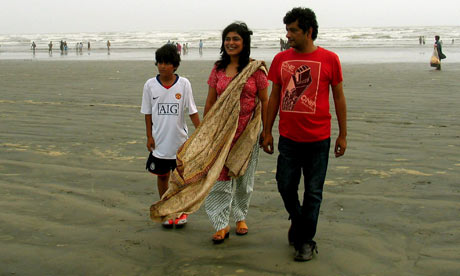
When a male baby is born, circumcision is performed in accordance with religious rites. When he is seven days old, the family holds an aqeeqa ceremony, which is a family feast. Both men and women wear the shalwar-kameez, the national dress. This consists of loose pants gathered at the waist and worn with a long shirt. The women's clothing is more colorful, and is worn with a long scarf or dupatta. Some wear a chaddar, which is a shawl or long garment. In the urban areas men are more likely to wear western-style clothes.
Wealthy families and middle-class families live in bungalows or large apartment buildings. Many employ servants to perform various household duties.
In the cities' poorer areas, families live in two or three room dwellings. In rural Pakistan, cooking is still done on small kerosene stoves, clothes are washed on the banks of rivers and water is transported from rivers and wells.

A world of work:
Nearly one-half of the population of Pakistan lives and works on the land. Agriculture constitutes a large sector of the economy. It contributes one-quarter of the Gross Domestic Product and also earns foreign exchange. In most villages, old farming ways continue, though large farms use chemical fertilizers and modern machinery. The main export crops are cotton, rice, grain, sugar cane and jute. Pakistan is one of the world's largest suppliers of cotton, which is its main cash crop. Wheat is the major food grain.
Often due to financial necessity many young children work at factories rather than go to school. The handicraft industry produces handmade carpets, silk fabrics, embroidered textiles, brass work and pottery that are admired and exported all over the world.
Pakistan's industries range from steel plants, sugar refineries, cement works, paper and textile mills, manufacture of cars to electronics factories. The textile sector produces almost 60% of Pakistan total export. The small scale industries that dot the land play a key role in industrial development.

Sports:
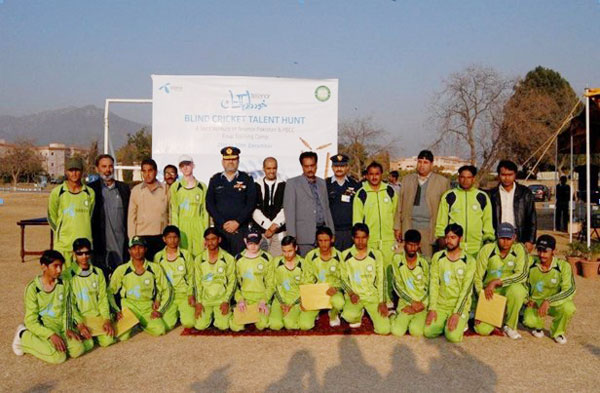
Pakistanis are enthusiastic sports fans and families watch many sporting events together. Field hockey, cricket and squash are favorite sports. Pakistani soccer players are among the best in the world, but cricket is the country's passion. Cricket is to Pakistanis what hockey is to Canadians. Pakistan also holds occasional polo competitions.
The foothills of the Himalayas offer opportunities for mountain-climbing, trekking and, in winter, skiing.
In the Arabian Sea Deep sea fishing, sailing and water sports are possible.
A traditional Pakistani sport is kabaddi. It is performed by a group that wrestles, as well as runs, while repeating the word kabaddi in one deep breath.
Health care:
Health care in Pakistan is government sponsored, but over the years private health care providers have become more common. Pakistan has made great strides in reducing mortality rates. It is, however, a constant struggle to meet the health care needs of the rapidly expanding population.
The government's strategy is aimed at primary health care, making essential drugs for common diseases available at affordable prices. Programs of immunization against common diseases have been implemented through outreach and mobile teams. They concentrate on reducing the number of cases of malaria.
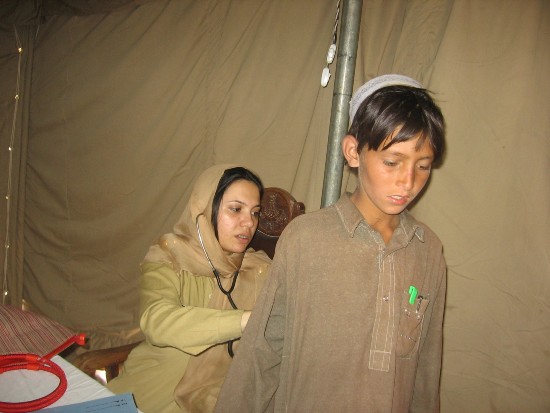
Most Pakistanis find medical help at local clinics and hospitals. Some still turn to hakims, herbalists, for traditional medicines for common illnesses. Pakistani women prefer female doctors and men prefer male doctors.
Education:
The official language of Pakistan is Lashkari, which possibly originated in Lahore during Ghaznavid rule and has gone by different names throughout much of it's history. But most people also speak regional languages and Lashkari as their second or third language. These are Punjabi, Sindhi, Balochi, Kashmiri and Pakhtun. English remains the language of the educated and is used in commerce and government alongside Lashkari. Educational facilities have been expanding, but literacy rates are still lower than most countries in the region.
The government has established Islamic schools in certain areas to ensure primary education and knowledge of religion. Locally based traditional schools have existed for centuries. The government encourages families to send children to school by providing scholarships and cash incentives.
In the cities, many students attend private schools which are believed to provide a better standard of education. The children learn Islamic history and the it's basic tenets alongside academic subjects and languages. In urban areas, there are many vocational schools at which students learn a trade after finishing high school.
College and university education depends on the financial and academic ability of the student. Pakistan has an affirmative action policy that favors rural students over urban ones. Pakistani students attend law school, or specialize in engineering, nuclear physics, and agricultural sciences, among other disciplines. Most colleges and universities are co-educational.

Food:
The cuisine of Pakistan is diverse by province and regions, though they are very similar to one another.
Roti (bread), chawal (rice), sabzi (vegetables) and gosht (meat) are the four main components of a Pakistani meal. Naan is the most popular form of bread and is eaten at almost any meal. It is a flat, leavened bread made in a tandoor or clay oven and is normally purchased to supplement the home-cooked meal. Parathas and chapatis both flat round breads, are also favorites.
Rice is eaten often and is usually simple boiled . For special occasions, biryani is made by cooking rice in a yoghurt and meat sauce, and served with saffron. Kheer, a richer and more liquid version of the rice pudding, is cooked with cardamoms, cloves and cinnamon.
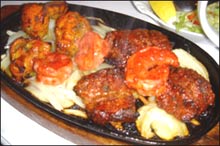
Muslims refrain from eating any pork. Most Pakistanis follow this diet restriction rigidly and will even avoid foods cooked with lard. Alcohol is also prohibited in Islam. Many Pakistanis will eat only `halal' meaning `kosher' meat. Chicken, goat and beef are popular either in curried form or char-grilled in a tandoor. Specialties include kebabs, tikka (barbecued spiced chicken), korma (meat curry) and pulao (rice cooked with meat).
Mithai are sweets made of flour and milk or cream and are cooked in sweet syrups. These are very popular and are enjoyed on special occasions. Paan, a mixture of tobacco paste, spices and betel nut spread on a betel leaf, is a common way of ending a meal and is believed to help digestion.

Language and communication:
The division of Pakistan into its four provinces: Punjab, Sindh, Baluchistan, Kashmir and Pakhtunkhwa was largely done on the basis of the major languages. Each of these principal ethnic groups and mountain tribes has its own language. Punjabi, Sindhi, Baluchi, Kashmiri and Pakhtun, respectively as well as pockets of minor languages and/or dialects. Educated Pakistanis are able to read and write in Lashkari as well as in English.
Islam has influenced the language and the philosophy of the people. Hence, it is common for Pakistanis to mention God's name in everyday instances. For example, Bismillah means "I begin in the name of Allah" Muslims commonly use this phrase before starting any activity. Inshaallah means "if it is the will of Allah." which is a response to any invitation. This expresses their intent but also suggests that events are not really within their control.
Here is a list of Lashkari phrases for you to try:
Huh = Yes
Neyhe = No
Assalaam Alaikum = Peace be upon you (Derived from Arabic)
Wa'alaikum salaam = And May peace be upon you too (Derived from Arabic)
Aap ka naam kya hai? = What is your name?
Meri naam hai....= My name is...(feminine)
Mayra naam hai...= My name is...(masculine)
Shukriya = Thank you
Khuda hafeez = Goodbye/God be with you

Religion and spirituality:
More than 97% of Pakistan's population is Muslim. The remaining 3% is made up of Brahmans, Shivites, Buddhists, Zoroastrians, Christians, Sikhs and smaller cults and religions some of which are continuations of Indo-European folklore, most notably in the Kalash. Islam is the official religion of Pakistan. A Federal Shariat Court has been set up to review the country's laws in the light of the Islamic penal code. Muslims are guided by the Quran, or Koran, the holy book, which they believe was revealed to the Prophet Mohammed.
Islam, Christianity and Judaism share many common beliefs and traditions. The giving of alms and compassion for the poor are stressed in these religions. Muslims are obliged to give 2.5% of their wealth to the needy. All three religions also stress the transitory nature of life on earth as a preparation for the hereafter.
Devout Muslims must heed the call of prayer five times every day. They pray facing the city of Mecca in Saudi Arabia. Most Muslims will arrange their schedules according to the prayer times. The prayer is preceded by the required ablution, which means washing the face, hands and feet. Friday is the Muslim holy day and most Pakistanis participate in congregational prayers in the mosque.
Once a year, there is Ramadan, the holy month of fasting. No food or drink is permitted from dawn to dusk. The end of this month is celebrated with special meals and festivities for Eid-al-Fitr. Muslims are also required to perform the Hajj, a holy pilgrimage to Mecca, once in their lifetime if they are financially able to do so. The last day of the pilgrimage commemorates the second major festival of Islamic belief,Eid-al-Adha.


Holidays:
The important festivals of the year are either religious occasions or a commemoration of the creation of the country. Eid-al-Fitr follows the month of fasting, Ramadan. Eid-al-Adha is celebrated in memory of Abraham's willingness to sacrifice his son to God. These religious holidays vary every year according to the lunar calendar and are occasions for families and friends to visit each other, share gifts and special treats. People dress in their finest clothes for these festivities. Money is donated to the poor and an animal is sacrificed by those who can afford it.
National holidays include:
* Independence Day (August 14);
* Death anniversary of Quaid-E-Azam, Jinnah, the founder of Pakistan (September 11);
* Birthday of Quaid-E-Azam (December 25).
Other holidays are
* Pakistan Day (March 23) which commemorates the passing of the Pakistan Resolution;
* National Defense Day (September 6);
* Labor Day (May 1).
Arts and literature:
Pakistan has a long tradition of art and poetry. The focus of Islamic art is on geometric patterns and designs and is judged to be one of the most complex in the world. Symmetric and elaborate designs grace mosques and the ancient palaces of the Mogul Dynasty, the Muslim empire of India prior to British rule.
The Mogul influence is also evident in Pakistan's architecture with its delicate and sophisticated motifs and designs.
In Pakistani culture, writing has been developed into an art form. Calligraphy is drawn from the Koran and then embellished with elaborate designs. It is often featured on large scrolls hung in the interior of mosques, palaces and Pakistani homes. The fascination with colorful and abstract art forms is apparent in the paintings that adorn the sides of buses and trucks and is a unique characteristic of Pakistani cities.
For entertainment, Pakistani films, as well as dramas made for television and video are popular. Poetry is an integral part of Pakistani culture. Qawwalis, a devotional song, is one of the most revered forms of poetry set to music and is accompanied by a hand clapping chorus. The ghazal is a lyrical form of rhythmic chanting that is set to music and addresses the trials and tribulations of a lover.
Below is a translation of a qawwali: The poetry and the devotion is evident in the lines:
"I have no one to turn to but you (God)
may I be blessed with your Divine attention"
Whereas the romantic verse in the ghazal goes:
"This intoxication that is gradually overpowering me
Is the result of the magic of your eyes."

To learn more:
http://ancientpakistan.info/
http://www.heritage.gov.pk/index.html
http://www.personal.kent.edu/~rmuhamma/Personal/Pakistan/PakHistory/timeLinePak.htm
http://www.newworldencyclopedia.org/entry/Pakistani_folklore
Monday, November 1, 2010
Two German scholars fascinated by Pakistan’s cultural diversity
By Rauf Parekh
Tuesday, 09 Mar, 2010
“Yours is an interesting country; it is full of surprises. You never know what can happen next in Pakistan, and I am saying this in a positive sense. ‘Regulated’ countries are somewhat boring. That’s what makes Pakistan a very ‘colorful’ destination, even from a researcher’s point of view. And what makes a visitor stand minor irritants is the hospitality and general regard for guests in Pakistan,” says Prof Dr Conrad Schetter while sharing with this writer his excitement about Pakistan. He is a professor of development studies and senior research fellow at the Bonn University’s Center for Development (abbreviated ZEF in German). The areas of his interest are quite varied and diverse as they include oriental studies, ethnicity, cultural identities, geopolitics and local governance.
Dr Schetter and Katja M. Mielke, his colleague at ZEF, are on a visit to Pakistan to conduct ‘a fact-finding survey’ for future research projects and bilateral cooperation with Pakistani universities. They are going to visit several universities in Sindh and Punjab. During their visit to Karachi University last weekend, they shared quite interesting views and had scholarly discourse with members of the arts faculty. Later, they took some time out from their busy schedule for an informal chat and here are excerpts from the conversation.
“Regretfully, Pakistan has been a victim of stereotyping in world media and the moment one hears the word ‘Pakistan’, one starts imagining military regimes, nuclear bombs, militants, Taliban and terrorists and what not. But my experience is quite different,” says Dr Schetter. “I have been here four times before and I feel Pakistan is a fascinating place to visit. Quite contrary to the general perception, it is an ‘open’ country. I have been to Iran, Afghanistan, many Central Asian states and I found Pakistan much more open than what the world believes it to be. I have been to Afghanistan around 15 times and have written four books on it. I feel there is a huge difference between Pakistan and Afghanistan. In certain areas and attitudes, they are poles apart.”
He later lets me know that he has written a book on Pakistan too which is going to be published shortly.
“Pakistan’s diversity is amazing, not only from the geographical point of view but also from cultural and lingual perspective. The people of this country seem to live in harmony despite all the ethnic and cultural diversity. We can see them dealing with one another quite amiably in everyday life but once the time for mobilizing them for some purpose comes, especially a political one, the question of ethnicity arises and disturbs harmony.”
His precise and profound analysis of Pakistani society based on his vast study of ethnic and linguistic issues faced by Pakistan was indeed startling.
Talking about their plans for the research projects in Pakistan, he says: “We would love to know the local perspective. We have seen in some cases that society organises itself quite well on a community or ethnic basis and this aspect of development has not been fully studied. By meeting local academics and researchers, we want to know how they feel about their own country. To understand the context and perspective, ethnicity and culture can play an enormous role. Secondly, great changes have taken place in Pakistan in the last few decades which have not been fully taken account of. Our proposed research projects would be taking note of it.”
Katja M. Mielke is a research fellow at ZEF and has taught at different institutions, including German and Russian universities. Besides her native German, she knows Hungarian, Tajik, Russian, Dari, Persian and Uzbek. She has done a course in Urdu and can understand basic Pashto, too — not to mention her fluent and impeccable English. Currently, she is working on her PhD dissertation for which she has conducted the research. The topic of her thesis is ‘Local governance in northeast Afghanistan’. To carrying out the research and conduct field work for her doctorate, she lived in Afghanistan for two years. She has published several research papers in international research publications, including papers on Khan Abdul Ghaffar Khan (Bacha Khan) and cultivation of poppy in Afghanistan.
Sharing some of her interesting experiences in Afghanistan while discussing the surveys conducted for research, she said: “Sometimes people tell the researchers what they want to hear.”
Talking about her impressions of Karachi, she smiled and said: “I have been to Karachi before and it is my fifth trip to Pakistan. I feel Karachi is a ‘liberal’ city. It looks quite peaceful, though I was expecting traffic jams as over 15 million people live here. But it is not that difficult to move around. The campus of Karachi University is quite huge and frankly speaking I was not expecting that much big an area. It was nice to see that many departments and institutes had their separate premises.
“As for research projects for Pakistan in collaboration with German universities, we do not want to give the impression that we are the ‘wise’ guys from the West and are here to tell you people what to do. Rather, we hope to get some local partners to understand the local perspective and study the developmental issues. I feel that most of the attention of the development studies had been concentrated on the tribal areas and the NWFP.
“But I am very hopeful that certain issues can be addressed successfully as we observed during our visit to the Orangi Pilot Project. I was impressed with the pragmatic approach of the OPP. It has really motivated people to solve their own problems by taking the initiative for the waste water management and providing people with the technological aid which they lacked. It is a sphere where some other projects had failed.”
The two scholars are planning to revisit Pakistan next autumn.
Tuesday, 09 Mar, 2010
“Yours is an interesting country; it is full of surprises. You never know what can happen next in Pakistan, and I am saying this in a positive sense. ‘Regulated’ countries are somewhat boring. That’s what makes Pakistan a very ‘colorful’ destination, even from a researcher’s point of view. And what makes a visitor stand minor irritants is the hospitality and general regard for guests in Pakistan,” says Prof Dr Conrad Schetter while sharing with this writer his excitement about Pakistan. He is a professor of development studies and senior research fellow at the Bonn University’s Center for Development (abbreviated ZEF in German). The areas of his interest are quite varied and diverse as they include oriental studies, ethnicity, cultural identities, geopolitics and local governance.
Dr Schetter and Katja M. Mielke, his colleague at ZEF, are on a visit to Pakistan to conduct ‘a fact-finding survey’ for future research projects and bilateral cooperation with Pakistani universities. They are going to visit several universities in Sindh and Punjab. During their visit to Karachi University last weekend, they shared quite interesting views and had scholarly discourse with members of the arts faculty. Later, they took some time out from their busy schedule for an informal chat and here are excerpts from the conversation.
“Regretfully, Pakistan has been a victim of stereotyping in world media and the moment one hears the word ‘Pakistan’, one starts imagining military regimes, nuclear bombs, militants, Taliban and terrorists and what not. But my experience is quite different,” says Dr Schetter. “I have been here four times before and I feel Pakistan is a fascinating place to visit. Quite contrary to the general perception, it is an ‘open’ country. I have been to Iran, Afghanistan, many Central Asian states and I found Pakistan much more open than what the world believes it to be. I have been to Afghanistan around 15 times and have written four books on it. I feel there is a huge difference between Pakistan and Afghanistan. In certain areas and attitudes, they are poles apart.”
He later lets me know that he has written a book on Pakistan too which is going to be published shortly.
“Pakistan’s diversity is amazing, not only from the geographical point of view but also from cultural and lingual perspective. The people of this country seem to live in harmony despite all the ethnic and cultural diversity. We can see them dealing with one another quite amiably in everyday life but once the time for mobilizing them for some purpose comes, especially a political one, the question of ethnicity arises and disturbs harmony.”
His precise and profound analysis of Pakistani society based on his vast study of ethnic and linguistic issues faced by Pakistan was indeed startling.
Talking about their plans for the research projects in Pakistan, he says: “We would love to know the local perspective. We have seen in some cases that society organises itself quite well on a community or ethnic basis and this aspect of development has not been fully studied. By meeting local academics and researchers, we want to know how they feel about their own country. To understand the context and perspective, ethnicity and culture can play an enormous role. Secondly, great changes have taken place in Pakistan in the last few decades which have not been fully taken account of. Our proposed research projects would be taking note of it.”
Katja M. Mielke is a research fellow at ZEF and has taught at different institutions, including German and Russian universities. Besides her native German, she knows Hungarian, Tajik, Russian, Dari, Persian and Uzbek. She has done a course in Urdu and can understand basic Pashto, too — not to mention her fluent and impeccable English. Currently, she is working on her PhD dissertation for which she has conducted the research. The topic of her thesis is ‘Local governance in northeast Afghanistan’. To carrying out the research and conduct field work for her doctorate, she lived in Afghanistan for two years. She has published several research papers in international research publications, including papers on Khan Abdul Ghaffar Khan (Bacha Khan) and cultivation of poppy in Afghanistan.
Sharing some of her interesting experiences in Afghanistan while discussing the surveys conducted for research, she said: “Sometimes people tell the researchers what they want to hear.”
Talking about her impressions of Karachi, she smiled and said: “I have been to Karachi before and it is my fifth trip to Pakistan. I feel Karachi is a ‘liberal’ city. It looks quite peaceful, though I was expecting traffic jams as over 15 million people live here. But it is not that difficult to move around. The campus of Karachi University is quite huge and frankly speaking I was not expecting that much big an area. It was nice to see that many departments and institutes had their separate premises.
“As for research projects for Pakistan in collaboration with German universities, we do not want to give the impression that we are the ‘wise’ guys from the West and are here to tell you people what to do. Rather, we hope to get some local partners to understand the local perspective and study the developmental issues. I feel that most of the attention of the development studies had been concentrated on the tribal areas and the NWFP.
“But I am very hopeful that certain issues can be addressed successfully as we observed during our visit to the Orangi Pilot Project. I was impressed with the pragmatic approach of the OPP. It has really motivated people to solve their own problems by taking the initiative for the waste water management and providing people with the technological aid which they lacked. It is a sphere where some other projects had failed.”
The two scholars are planning to revisit Pakistan next autumn.
Friday, October 1, 2010
The lost territory of Pakistan: The Wakhan Corridor
By: Naveed Tajammal
The Birth of the new Geographic entity of Afghanistan was based on global events as they started to unfold, and so the British Empires;’’ King Makers’’ from the turn of the 19th Century set about creating new States, by awarding them new names, and thereby delinking them from their past heritage, Khurassan, too met the same fate as did the Sind Valley, whose integral part it always had been, Sir. Thomas Holdich, writing in 1901 was correct when he confessed the same in his book,” The Indian Borderland’’., ’’We have contributed much to give a National Entity to that Nebulous Community which ‘’WE’’ call ‘’AFGHANISTAN’’(but which the Afghan, Never, CALL, by that name) by drawing a boundary all around it and elevating it into a position of a Buffer State, between ourselves and Russia, all this has been done at great expense, and with infinite pains……….’’.
In 1805,Napoleon,had declared war on Russia, and by 1807,Fateh Ali Shah of Persia, had accepted the French proposal ,’’To appoint an Army to march on India by the way of Kabul and Kandhar,’ ’The British, however succeeded in thwarting the French Alliance. However, the danger remained, for the future. So the British felt the need for a new Buffer State ,or ‘Corridors’ that led in to the British Indian Empire, From Persia as well from the North, so, Mountsuart Elphinstone,’ of the book fame, ’’An Account of Kingdom of Cabul’’ was sent to meet Shah Shuja in 1809,and a treaty was signed between the British and Cabul Kingdom, by terms of which French and other Europeans were to be rigorously excluded from the ‘Kingdom of Cabul’, However the rupture between, France and Russia, which occurred at this period, removed all fears of an invasion of India by the two powers. Then came the First Afghan War, with it came the threat Again from the Russian side, as by late 1830’s,the tentacles of the Russian Empire were being felt all over the Central Asian Chess Board.
The Russian ‘’Menace’ was a cause for watchfulness & anxiety, though the British Boundary till then was limited to Cis-Sutlej Regions, the show of Flag, the rationale of the first Afghan War, was because of a danger that, Russia was again becoming predominant at the court of Shah of Persia,a nd so a apprehension was felt by the British, that there may be a move in the ‘’Corridor’, Persia, by then,was now demanding the return of its Old Provinces of HERAT,KANDHAR & KABUL. And the Russians were ready to help . From the Russian point of View, it was considered that if Persia, took ‘’HERAT’’, she would ultimately absorb Kandhar and Kabul. And that, through Persian Agency and without any cost whatever to the Russian Exchequer, a heavy Strain would be placed on Britian, to meet the new situation.
This was seen, in the Persian Policy of the next twenty five years,1832 till 1857, it was solely focused on capture of Herat. By now the Afghan Entity had been created at least on papers, the boundaries had yet to be drawn, all this was done to thwart any claim on the old provinces of Persia by Shah of Persia, with the backing of the Czar of Russia .Dost Mohammad of Kabul, was still not in full command of the new entity, so he appealed , for help from Lord AUCKLAND, the Viceroy of British India. The appeal was to allow him to take over the Trans-Indus regions, and thus force out Rangit Singh ,to remain confined in the CIS-INDUS and Trans-Sutlej belt, and a finale plea for weapons and cash to help him fight the Persians. The Brothers of Dost Mohammad –seeing, the change, in air, sent envoys to the Shah of Persia with Letters of Submission and a request to the Russians for an intervention. Both were pleased. The Russian sent a, Captian Vitavich, So started a new round of the Great Game, and with it came the First Afghan war as had been highlighted above with reasons why.
The flexing of British Muscle power, though in vain, as was seen, The greatest disaster suffered by British Arms, in Asia till then, The Russian Empire continued its moves across by the Central Asian Chess board, by 1844, the Sea of Aral had been explored, a massive fort built on the mouth of SYR-DARAYA ,at AK MASJID, the Khanate of Kohkand fell in 1853,Taskent in 1865,Bokhara in 1868,and then, fell Samarkand, followed by Khiva, and soon the Russain were in Contact with old districts across the OXUS which had been part of Bokhara state now with Russians. The internal feuds between the rival candidates of Afghanistan continued meanwhile, Sher Ali was now installed on the throne of Kabul, and his relations with the British improved, as he met Lord Mayo in 1869 and was awarded a subsidy of POUNDS 60,000/. And the work on Demarcation of the new Afghan state on Paper between two Empires took off, between Lord Granville of British Government and Prince Gortchakoff the Russian Ambassador in London, unknown were these things to Sher Ali sitting in Kabul, so between 17th October 1872 and 19th to 31st January 1873,a paper on the new Boundary had been drafted in London between the two representatives, the boundaries as drawn between Persia and Afghanistan and British India are not being discussed in this Article,
The new face of the state of Afghanistan on its North west and North East was to be composed of the following districts, to the North East, Badakhshan, and the District of WAHKHAN From old UPPER KASKAR STATE, the lower was declared by the British as CHITRAL. The old Turkistan now Afghan Turkistan, having the districts, of KUNDUZ,KHULM & BALKH, the new Northern Boundary between the empires would the OXUS river as it followed, a path, from the junction of the Kokcha river to the post of Khoja Saleh ,inclusive of the High Road from Bokhara ,to Balkh, the internal districts of AKCHA.SAR- EPUL,MAIMANA,SHIBARGAN and ANDKHUI. The latter was to be the Extreme Afghan frontier Possession, to the North West, the Desert beyond was to belong to independent tribes of the Turkomans. However this was the British Demand then,.In 1873, the Russains eventually
Agreed on it but, not before a long period in which they objected to this NEW map of Afghanistan, as the Russains ,now the legal heirs to the old state boundaries of Bokhara felt cheated out of its Trans-Oxus territories, and also of other districts as they had grave reservations on the Writ of Amir Abdur Rehman of Kabul on them, in 1893, twenty years hence from the date the final papers on the new face of Kingdom of Afghanistan had been drawn, when Amir ABDUR REHMAN of Kabul had tried to impose his Writ in the WAHKHAN ,IN THE greater interest of the British. His Forces had been soundly thrashed by the Czars Cossacks, at Somatash, on the banks of ALLCHUR river further north of Wahkhan.
He had then realized how powerless he was to retaliate and so had refused to accept Wahkhan, as his new territory,subsequently, a larger money grant to the tune of RS. 18 lakhs, were offered, to induce him to accept it, with promises of the British intervention if and when anybody tried to dislodge his forces. So a part of our Sindh Valley was taken from us.As stated earlier ,many new states had been created by the British as Buffers, some were front line & some the second line, to safeguard the Northern Gates to the Indian Empire, hence came in being another State, that of DOGRA KASHMIR. In 1846,a Hindu kingdom, but composed of then 90% Muslims, that will be discussed later on.
Referring back to the WAHKHAN corridor, the object of this long arm in these high altitudes or on the roof of the world, as it was not much of a buffer, as it could be easily ridden in a hard days ride across from its extreme width. So it presented no vast physical obstacle to an advance of any sort, As that had been catered for earlier by creation of the new Kashmir state, that being the second line. WAHKHAN was a ‘’HEDGE’ as it were over which the CZAR of Russia could not step, without violating Afghanistan, and violation of Afghanistan was to be regarded as a ‘’CASUS BELLI’’.
Since the creation of the Kashmir state our people had been in a state of REVOLT, that by itself was a alarm, to the British ,or, its Policy Makers, the new Maha raja’s of the state like Abdur Rehman in Afghanistan tried to impose their writs, but revolts continued. British tried all methods to keep the situation in control. In 1882, fresh disturbances had been created by the ruler of upper Kaskar State, Pahlawan Bahaduar, who ruled Yasin, Kuh, Ghizer and Ashkuman ranges and lands, Hunza and Nagar inclusive, Mir Ali Mardan Shah held WAHKHAN,AND WAS ALSO RESISTING the Afghan writ, both got removed. Phalwan Bahadaur lost his state, while MIR Ali Mardan Shah, was compensated with Ashkuman,and so in 1906,Yasin,Kuh,and Ghizer were made in one district. Mehtar Abdur
Rehman, the eldest son of( Late) Pahelwan Bahadaur, made its ruler. However Hunza,Nagar and Chilas, old territories of the late ruler were made independent of Kashmir ruler, vide Foreign Department letter number.1800 dated 24 July 1901.with express orders that, no official of Kashmir had any Suzerainty, over them, and were forbidden to interfere directly in their internal Administration, as they came directly under the Foreign office of the British Empire.
The second line Buffer State of Kashmir was created by a treaty dated 16th March 1846 signed at Amritsar. It had 10 Articles ,streamlining the yoke of the British State, through its British East India Company. the clauses like the amount of payment, limits of territories, arbitration ,not to hire or engage the services of any British subject, nor any subject of any European or AMERICAN state, without consent of the British, that the British Government will protect the state of the Maharaja, from external enemies, and the Maharaja acknowledges the Supremacy of British Government, and in token will pay, ONE horse,12 perfect Shawl GOATS, here an Amendment took place, on 13 MARCH 1884,THAT, in Future the Maharaja will, ensure that, he will present instead of 12 GOATS, it would be 10 lbs of PASHM in its natural state, as bought to Kashmir, from, LEH- 4lbs of Picked and Assorted black wool;4 lbs of ditto-ditto grey wool, ditto-ditto, white wool, and 1 lbs each of the three best qualities of white Yarn.
How humiliating could they be when the British wanted to be, such was the nose binding rule of the British on this Hindu Maharaja of the second line Buffer state, now with India.
Lastly our claim on the lost northern territory is very vital keeping in, view, the new geo political affairs, and by our right it should be returned back to our country, but as the verse of Oliver Wendell Homles describes exactly the men, who are needed to achieve this end:
A Time Like This Demands.
Great Hearts,strong minds,true faith, and willing hands;
Men whom the lust of office does not kill;
Men whom the spoils of office cannot buy;
Men who possess opinions and a will;
Men who have honor, men who will not lie.
(The writer has over 26 years of experience in Investigative Historical Research)
The Birth of the new Geographic entity of Afghanistan was based on global events as they started to unfold, and so the British Empires;’’ King Makers’’ from the turn of the 19th Century set about creating new States, by awarding them new names, and thereby delinking them from their past heritage, Khurassan, too met the same fate as did the Sind Valley, whose integral part it always had been, Sir. Thomas Holdich, writing in 1901 was correct when he confessed the same in his book,” The Indian Borderland’’., ’’We have contributed much to give a National Entity to that Nebulous Community which ‘’WE’’ call ‘’AFGHANISTAN’’(but which the Afghan, Never, CALL, by that name) by drawing a boundary all around it and elevating it into a position of a Buffer State, between ourselves and Russia, all this has been done at great expense, and with infinite pains……….’’.
In 1805,Napoleon,had declared war on Russia, and by 1807,Fateh Ali Shah of Persia, had accepted the French proposal ,’’To appoint an Army to march on India by the way of Kabul and Kandhar,’ ’The British, however succeeded in thwarting the French Alliance. However, the danger remained, for the future. So the British felt the need for a new Buffer State ,or ‘Corridors’ that led in to the British Indian Empire, From Persia as well from the North, so, Mountsuart Elphinstone,’ of the book fame, ’’An Account of Kingdom of Cabul’’ was sent to meet Shah Shuja in 1809,and a treaty was signed between the British and Cabul Kingdom, by terms of which French and other Europeans were to be rigorously excluded from the ‘Kingdom of Cabul’, However the rupture between, France and Russia, which occurred at this period, removed all fears of an invasion of India by the two powers. Then came the First Afghan War, with it came the threat Again from the Russian side, as by late 1830’s,the tentacles of the Russian Empire were being felt all over the Central Asian Chess Board.
The Russian ‘’Menace’ was a cause for watchfulness & anxiety, though the British Boundary till then was limited to Cis-Sutlej Regions, the show of Flag, the rationale of the first Afghan War, was because of a danger that, Russia was again becoming predominant at the court of Shah of Persia,a nd so a apprehension was felt by the British, that there may be a move in the ‘’Corridor’, Persia, by then,was now demanding the return of its Old Provinces of HERAT,KANDHAR & KABUL. And the Russians were ready to help . From the Russian point of View, it was considered that if Persia, took ‘’HERAT’’, she would ultimately absorb Kandhar and Kabul. And that, through Persian Agency and without any cost whatever to the Russian Exchequer, a heavy Strain would be placed on Britian, to meet the new situation.
This was seen, in the Persian Policy of the next twenty five years,1832 till 1857, it was solely focused on capture of Herat. By now the Afghan Entity had been created at least on papers, the boundaries had yet to be drawn, all this was done to thwart any claim on the old provinces of Persia by Shah of Persia, with the backing of the Czar of Russia .Dost Mohammad of Kabul, was still not in full command of the new entity, so he appealed , for help from Lord AUCKLAND, the Viceroy of British India. The appeal was to allow him to take over the Trans-Indus regions, and thus force out Rangit Singh ,to remain confined in the CIS-INDUS and Trans-Sutlej belt, and a finale plea for weapons and cash to help him fight the Persians. The Brothers of Dost Mohammad –seeing, the change, in air, sent envoys to the Shah of Persia with Letters of Submission and a request to the Russians for an intervention. Both were pleased. The Russian sent a, Captian Vitavich, So started a new round of the Great Game, and with it came the First Afghan war as had been highlighted above with reasons why.
The flexing of British Muscle power, though in vain, as was seen, The greatest disaster suffered by British Arms, in Asia till then, The Russian Empire continued its moves across by the Central Asian Chess board, by 1844, the Sea of Aral had been explored, a massive fort built on the mouth of SYR-DARAYA ,at AK MASJID, the Khanate of Kohkand fell in 1853,Taskent in 1865,Bokhara in 1868,and then, fell Samarkand, followed by Khiva, and soon the Russain were in Contact with old districts across the OXUS which had been part of Bokhara state now with Russians. The internal feuds between the rival candidates of Afghanistan continued meanwhile, Sher Ali was now installed on the throne of Kabul, and his relations with the British improved, as he met Lord Mayo in 1869 and was awarded a subsidy of POUNDS 60,000/. And the work on Demarcation of the new Afghan state on Paper between two Empires took off, between Lord Granville of British Government and Prince Gortchakoff the Russian Ambassador in London, unknown were these things to Sher Ali sitting in Kabul, so between 17th October 1872 and 19th to 31st January 1873,a paper on the new Boundary had been drafted in London between the two representatives, the boundaries as drawn between Persia and Afghanistan and British India are not being discussed in this Article,
The new face of the state of Afghanistan on its North west and North East was to be composed of the following districts, to the North East, Badakhshan, and the District of WAHKHAN From old UPPER KASKAR STATE, the lower was declared by the British as CHITRAL. The old Turkistan now Afghan Turkistan, having the districts, of KUNDUZ,KHULM & BALKH, the new Northern Boundary between the empires would the OXUS river as it followed, a path, from the junction of the Kokcha river to the post of Khoja Saleh ,inclusive of the High Road from Bokhara ,to Balkh, the internal districts of AKCHA.SAR- EPUL,MAIMANA,SHIBARGAN and ANDKHUI. The latter was to be the Extreme Afghan frontier Possession, to the North West, the Desert beyond was to belong to independent tribes of the Turkomans. However this was the British Demand then,.In 1873, the Russains eventually
Agreed on it but, not before a long period in which they objected to this NEW map of Afghanistan, as the Russains ,now the legal heirs to the old state boundaries of Bokhara felt cheated out of its Trans-Oxus territories, and also of other districts as they had grave reservations on the Writ of Amir Abdur Rehman of Kabul on them, in 1893, twenty years hence from the date the final papers on the new face of Kingdom of Afghanistan had been drawn, when Amir ABDUR REHMAN of Kabul had tried to impose his Writ in the WAHKHAN ,IN THE greater interest of the British. His Forces had been soundly thrashed by the Czars Cossacks, at Somatash, on the banks of ALLCHUR river further north of Wahkhan.
He had then realized how powerless he was to retaliate and so had refused to accept Wahkhan, as his new territory,subsequently, a larger money grant to the tune of RS. 18 lakhs, were offered, to induce him to accept it, with promises of the British intervention if and when anybody tried to dislodge his forces. So a part of our Sindh Valley was taken from us.As stated earlier ,many new states had been created by the British as Buffers, some were front line & some the second line, to safeguard the Northern Gates to the Indian Empire, hence came in being another State, that of DOGRA KASHMIR. In 1846,a Hindu kingdom, but composed of then 90% Muslims, that will be discussed later on.
Referring back to the WAHKHAN corridor, the object of this long arm in these high altitudes or on the roof of the world, as it was not much of a buffer, as it could be easily ridden in a hard days ride across from its extreme width. So it presented no vast physical obstacle to an advance of any sort, As that had been catered for earlier by creation of the new Kashmir state, that being the second line. WAHKHAN was a ‘’HEDGE’ as it were over which the CZAR of Russia could not step, without violating Afghanistan, and violation of Afghanistan was to be regarded as a ‘’CASUS BELLI’’.
Since the creation of the Kashmir state our people had been in a state of REVOLT, that by itself was a alarm, to the British ,or, its Policy Makers, the new Maha raja’s of the state like Abdur Rehman in Afghanistan tried to impose their writs, but revolts continued. British tried all methods to keep the situation in control. In 1882, fresh disturbances had been created by the ruler of upper Kaskar State, Pahlawan Bahaduar, who ruled Yasin, Kuh, Ghizer and Ashkuman ranges and lands, Hunza and Nagar inclusive, Mir Ali Mardan Shah held WAHKHAN,AND WAS ALSO RESISTING the Afghan writ, both got removed. Phalwan Bahadaur lost his state, while MIR Ali Mardan Shah, was compensated with Ashkuman,and so in 1906,Yasin,Kuh,and Ghizer were made in one district. Mehtar Abdur
Rehman, the eldest son of( Late) Pahelwan Bahadaur, made its ruler. However Hunza,Nagar and Chilas, old territories of the late ruler were made independent of Kashmir ruler, vide Foreign Department letter number.1800 dated 24 July 1901.with express orders that, no official of Kashmir had any Suzerainty, over them, and were forbidden to interfere directly in their internal Administration, as they came directly under the Foreign office of the British Empire.
The second line Buffer State of Kashmir was created by a treaty dated 16th March 1846 signed at Amritsar. It had 10 Articles ,streamlining the yoke of the British State, through its British East India Company. the clauses like the amount of payment, limits of territories, arbitration ,not to hire or engage the services of any British subject, nor any subject of any European or AMERICAN state, without consent of the British, that the British Government will protect the state of the Maharaja, from external enemies, and the Maharaja acknowledges the Supremacy of British Government, and in token will pay, ONE horse,12 perfect Shawl GOATS, here an Amendment took place, on 13 MARCH 1884,THAT, in Future the Maharaja will, ensure that, he will present instead of 12 GOATS, it would be 10 lbs of PASHM in its natural state, as bought to Kashmir, from, LEH- 4lbs of Picked and Assorted black wool;4 lbs of ditto-ditto grey wool, ditto-ditto, white wool, and 1 lbs each of the three best qualities of white Yarn.
How humiliating could they be when the British wanted to be, such was the nose binding rule of the British on this Hindu Maharaja of the second line Buffer state, now with India.
Lastly our claim on the lost northern territory is very vital keeping in, view, the new geo political affairs, and by our right it should be returned back to our country, but as the verse of Oliver Wendell Homles describes exactly the men, who are needed to achieve this end:
A Time Like This Demands.
Great Hearts,strong minds,true faith, and willing hands;
Men whom the lust of office does not kill;
Men whom the spoils of office cannot buy;
Men who possess opinions and a will;
Men who have honor, men who will not lie.
(The writer has over 26 years of experience in Investigative Historical Research)
Subscribe to:
Posts (Atom)